DSO carries two meanings in dentistry: Dental Service Organization and Days Sales Outstanding. This guide focuses on the second, the metric that tells you how fast billed production actually turns into collected cash.
We'll cover how to measure dental DSO correctly, where delays typically start, how to fix the workflows behind them, and how connected reporting helps you manage cash flow whether you run one office or fifty.
Key Takeaways
- Days sales outstanding (DSO) tracks how fast billed production turns into collected cash—a core revenue-cycle health signal.
- High DSO often starts upstream—in eligibility, documentation, coding, or claims—not only in collections calls.
- Segment DSO by insurance AR, patient AR, location, provider, and aging bucket instead of one blended average.
- Sustained DSO gains come from consistent workflows, clear ownership, and connected reporting.
What DSO Management Means for a Dental Practice
Defining Days Sales Outstanding
Days Sales Outstanding is the average number of days between recognizing revenue and getting paid for it. The standard formula:
DSO = (Accounts Receivable ÷ Net Credit Sales) × Number of Days in the Period
For example, a practice with $120,000 in outstanding AR and average net production of $4,000 per day is carrying roughly 30 days of DSO (money already earned but not yet collected).
For a dental practice, "net credit sales" isn't one clean number. You're collecting from insurance carriers, patients paying out of pocket, financing companies, and sometimes third-party payers, each with different timelines and rules. That's why dental DSO calculations usually separate insurance AR from patient AR rather than blending them together.
DSO Management vs. Collections
Collections is one task inside a much bigger system. DSO management includes everything that determines whether a claim or balance gets paid on time:
- Verifying insurance eligibility and benefits before treatment
- Submitting accurate, well-documented claims
- Coding procedures correctly
- Setting clear payment terms and having financial conversations
- Posting payments promptly
- Resolving disputes and denials
If any of these breaks down, your collections staff end up chasing money that should have arrived automatically.
The Other DSO: Dental Service Organizations
Dental Service Organizations centralize non-clinical functions such as billing, finance, technology, procurement, HR, and reporting so individual practices can focus on patient care. When a DSO manages Days Sales Outstanding across affiliated practices, it's really managing dozens of separate revenue cycles at once, each with its own payer mix and patient base.
Your ideal DSO depends on payer mix, specialty, procedure mix, insurer contract terms, and whether you offer financing. An oral surgery practice with high-cost cases and slow prior authorizations looks nothing like a pediatric practice built on routine hygiene visits.
Compare your DSO against your own history and against practices with a similar payer and procedure mix, not against a generic industry number.
Dental DSO Metrics and Root Causes
The Metrics Worth Tracking
Before you can improve DSO, you need a consistent baseline. Track these together, not in isolation:
- Total DSO – blended insurance and patient receivables converted to days
- Insurance DSO – how long payer claims take to convert to cash
- Patient DSO – how long patient balances take to convert to cash
- AR aging buckets – 0-30, 31-60, 61-90, 90+ days
- Collection rate – collections divided by net production
- Production-to-collection trend – whether the gap between what you produce and what you collect is widening or narrowing
Dental Intelligence's 2024 benchmark data found average practices carry about 28 days of patient AR, while the bottom 10% carry 75 days and the top 10% carry just 7. That gap is measured on patient AR alone, not blended with insurance receivables, so know which number you're comparing.

Segment Before You Diagnose
A single practice-wide DSO number can hide where the real problem sits. Break performance down by:
- Location
- Provider
- Payer
- Procedure category
- Claim status
- Individual patient account
Here's a diagnostic example. Imagine two locations both reporting a 35-day blended DSO. Location A's number comes almost entirely from slow-paying insurance claims stuck in the 60-90 day bucket. Location B's number comes from patient balances that were never clearly explained at checkout. Same overall metric, two completely different fixes.
Upstream and Downstream Causes
High DSO rarely starts in the collections department. Common upstream causes include:
- Inaccurate patient information or incomplete eligibility checks
- Coding or documentation errors that trigger denials
- Delayed claim submission and slow payment posting
- Unclear treatment cost estimates
An ADA-commissioned review found that the top 25 dental payers by claims volume returned, on average, less than half of the recommended eligibility-response data elements. That gap alone can produce wrong patient estimates before a patient ever sits in the chair.
Downstream, operational issues compound the problem. Unaccepted treatment plans, broken appointments, weak recall processes, and inconsistent financial conversations at checkout all reduce what you actually collect against what you expected.
A Weekly Review Habit
Combine AR aging with operational context every week:
- Top overdue accounts
- Unresolved claims
- Denial trends
- Unapplied payments and refunds
- Accounts nearing your internal escalation threshold
A sample morning-report format illustrates the point well: $29,400 outstanding across 16 patient accounts, sitting alongside 7 unscheduled treatment cases worth $26,200. Reviewed together weekly, this kind of view keeps AR problems from quietly aging into write-offs. Tools like Aria can surface that combined AR and operational picture—and flag accounts nearing escalation—without manual spreadsheet pulls.
Track the right metrics, segment before you act, and review the mix every week. That habit is what turns DSO from a lagging score into a controllable lever.
Best Practices to Improve Dental DSO
Set Financial Expectations Before Treatment
Confirm benefits, communicate estimated patient responsibility, and document payment policies before treatment starts. Offer multiple payment methods, but avoid promising coverage you can't guarantee. Insurance estimates are estimates, not commitments.
Submit Clean Claims the First Time
Every reworked claim adds days to your DSO. Standardize:
- Clinical documentation and required attachments
- Coding checks before submission
- Eligibility data pulled fresh, not from an old file
- Clear ownership of claim-status follow-up
Preventing rework upfront is almost always cheaper than chasing a denied claim three weeks later.
Build a Communication Cadence
Set a pre-due and post-due rhythm for patient balances:
- Provide a written estimate and payment policy before treatment
- Send a friendly reminder before the balance is due
- Follow up specifically shortly after it becomes overdue
- Call accounts that cross an escalation threshold
- Document payment plans and hardship requests consistently
Convenient payment links and portals reduce the friction that turns a willing payer into a slow one.
Separate Insurance and Patient Workflows
Payer denials, coordination-of-benefits issues, and pending claims need different scripts, owners, and timelines than overdue patient balances. Blending the two usually means both get worked inconsistently. Give your team:
- A dedicated insurance-AR owner
- A dedicated patient-AR owner
- Shared KPIs both can see, such as aging by bucket, denial rate, and days to post payment
What a Real Intervention Looks Like
Great Lakes Dental Partners, a network of more than 30 practices, found that patients were confused by billing statements carrying the parent organization's name instead of their local practice. After customizing statements by location and adding text-to-pay, the group's patient AR balance dropped from $8 million to below $3 million in a little over 18 months. Clearer statements and simpler ways to pay drove that result—not a tougher collections script.

As you tighten these workflows, protect the patient relationship. Use plain language in statements, document communication preferences and consent, and keep a clear review process for disputes, hardship requests, and refunds.
How Technology Supports DSO Management
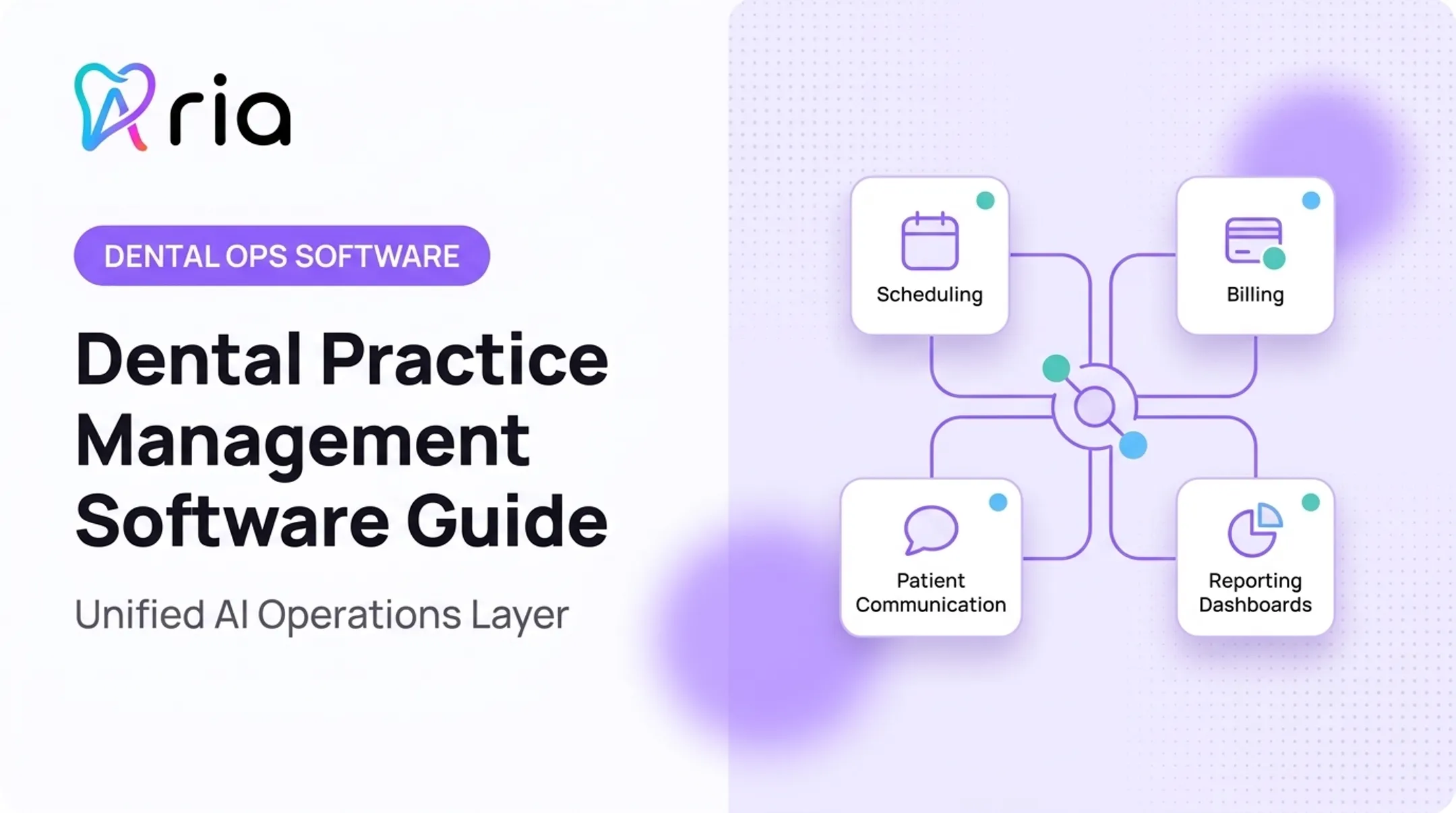
Chasing DSO performance gains with spreadsheets pulled from five different systems is slow and error-prone. Connected technology combines practice-management, revenue-cycle, payments, finance, payroll, and patient-communication data. You get one view of what's actually happening—not five partial views that don't agree.
Where Aria Fits
Aria is an AI operating layer built for dental practices, multi-location groups, and DSOs. It sits alongside your existing systems, rather than replacing them, and lets teams:
- Ask questions in plain language, such as which locations carry the highest patient AR over 90 days
- Compare periods, providers, practices, or locations side by side
- Turn a one-time question into a recurring report, alert, or scheduled workflow
- Trigger patient outreach through SMS, voice, web chat, or social channels for overdue balances
A practice performance review built in Aria pulls PMS data for production and scheduling, revenue-cycle data for AR and collections, and accounting data for expenses and labor cost. It returns analysis in seconds instead of an afternoon of spreadsheet exports.
A Buying Checklist for DSO-Management Technology
Before choosing a platform to help manage a DSO, check for:
- PMS and financial system integrations that don't require manual exports
- Separate visibility into insurance AR and patient AR
- Configurable alerts for aging thresholds and denial trends
- Role-based access and an audit trail
- HIPAA and security documentation
- Workflow automation, not just dashboards
- Cross-location comparisons if you operate more than one site
- Implementation support plus reporting your team will actually use
A Practical 90-Day DSO Improvement Roadmap
A 90-day plan keeps DSO work focused: measure in month one, fix one bottleneck in month two, then scale what works.
Days 1–30: Build the Baseline
- Validate how you're calculating DSO and reconcile AR data against your PMS
- Split insurance AR from patient AR
- Review aging buckets and denial trends
- Map your current workflow end to end, from eligibility check to payment posting
- Assign an executive owner and an operational owner
Days 31–60: Fix the Highest-Impact Bottleneck
Pick one or two workflows to standardize, not five. Common starting points include:
- Eligibility checks and clean-claim submission
- Pre-due patient payment communication
- Denial follow-up
- Payment posting speed
Set leading indicators (clean-claim submission rate) and lagging indicators (insurance DSO) so you can tell the change is working.
Days 61–90: Expand and Sustain
- Roll the standardized workflow out across every location
- Review results weekly, not quarterly
- Refine escalation rules based on what's actually happening
- Train teams on the new process, not just the old exceptions
- Decide whether a connected layer like Aria can cut the manual reporting required to sustain the gains

Matching the Roadmap to Your Complexity
Match ownership and infrastructure to your footprint:
- Single-location practices can run all three phases with one office manager and about 30 minutes of weekly review
- Multi-location groups need workflows that transfer cleanly between offices, plus someone comparing performance across sites
- Mature DSOs need support-center standards and reporting that flags outliers early, scaled to systems and locations—not headcount alone
Frequently Asked Questions
What does DSO stand for?
DSO can mean Dental Service Organization or Days Sales Outstanding. This guide uses Days Sales Outstanding—how fast billed production converts to collected cash—except when discussing Dental Service Organizations.
What is DSO healthcare?
In healthcare, DSO applies accounts-receivable logic to medical and dental revenue cycles: how many days, on average, it takes to collect on billed care. In dentistry, that includes both insurance receivables and patient receivables.
How do you calculate DSO for a dental practice?
The standard formula is (Accounts Receivable ÷ Net Credit Sales) × Number of Days. Use total outstanding AR and net production over the same period, calculating insurance AR and patient AR separately for a clearer picture.
What causes high DSO in dental practices?
Delayed claim submission, denials, incomplete eligibility checks, coding errors, slow payment posting, unclear patient estimates, and inconsistent follow-up all push DSO higher. Most of these start upstream of the collections desk.
What is a good DSO for a dental practice?
There's no universal number. Your target depends on payer mix, specialty, contract terms, and billing practices, so compare your DSO against your own trend and against practices with a similar payer and procedure mix.
How can a dental practice reduce DSO without harming patient relationships?
Give patients clear estimates before treatment, send respectful and specific reminders, offer flexible payment options, and resolve billing errors quickly. Transparency collects faster than pressure.