Introduction
A dental case presentation connects a clinical finding to a patient's ability to make an informed choice about their care. It should never feel like a sales pitch.
Done well, it builds trust. Done poorly, it creates confusion, or worse, pressure.
Patients walk into these conversations carrying real obstacles:
- Information overload from technical terms they've never heard
- Dental anxiety that makes even simple conversations stressful
- Cost concerns they're afraid to bring up
- Unclear understanding of why a treatment actually matters
- Inconsistent follow-up that leaves questions unanswered
This article covers how to prepare the presentation, walk through a clear framework, explain options without jargon, and handle the concerns patients raise most often. It also shows how to follow up in a way that respects their autonomy instead of chasing a sale.
Key Takeaways
- Connect every recommendation to the patient's own stated goals and concerns, not just the clinical findings.
- Replace technical terminology with plain language, visuals, and realistic expectations.
- Present costs and scheduling transparently, then let the patient decide.
- Treat follow-up as part of the clinical process, coordinated between clinical and administrative staff.
What Is a Dental Case Presentation and Why Does It Matter?
A dental case presentation is the structured conversation that turns clinical findings into a decision the patient can make. The provider covers:
- Oral health findings and recommended treatment
- Expected benefits, reasonable alternatives, and risks
- Timing and cost
Diagnosis vs. Presentation: Two Different Jobs
The diagnosis identifies what's wrong. The case presentation helps the patient understand why it matters and what their options are.
A textbook-accurate diagnosis still fails if the presentation never connects to the patient's priorities—cost, time, fear, or aesthetics. Patients leave confused, anxious, or stuck when that link is missing.
Education, Not a Sales Pitch
Patient autonomy is a professional obligation, not a courtesy. The ADA's ethical principles call for involving patients in treatment decisions, accounting for their needs, desires, and abilities, and disclosing proposed treatment plus reasonable alternatives.
A patient's right to ask questions, decline care, or take time to decide is part of the process—not an obstacle to it.
That is the line between education-based communication and pressure tactics:
- Education-based: Clear findings, options, risks, and room for questions
- Pressure-based: Urgency, guilt, or exaggerated outcomes to force a same-day yes
Pressure may close a case once. It erodes the trust that brings patients back for preventive care, referrals, and long-term treatment.
How to Prepare for a Dental Case Presentation
Preparation happens before the patient sits down. Skipping this step is the fastest way to lose their confidence mid-conversation.
Review the complete clinical picture
Before the appointment, gather:
- Relevant findings, images, radiographs, and scans
- Reported symptoms and dental or medical history
- Urgency level and consequences of delaying treatment
- Any prior treatment attempts or complications
Understand what the patient actually wants
Review prior notes and the chief complaint for clues about comfort, function, appearance, timing, and past dental experiences. Prepare open-ended questions that uncover what they hope treatment will change. A patient worried about a visible chip needs different framing than one worried about chronic pain, even when the clinical recommendation is identical.
Organize around priorities, not every detail
Not every clinical fact belongs in the conversation. Separate what's essential to the patient's decision from supporting technical context that can wait until they ask.
Build the plan before you walk in:
- Identify the recommended approach and reasonable alternatives
- Sequence the treatment and estimate the number of appointments
- Note recovery expectations, risks, and limitations
- Prepare visuals, such as photos, radiographs, or models, that directly support the explanation
- Confirm with your treatment coordinator that financial and scheduling details are consistent with what you'll say clinically
That last step matters more than most practices realize. If the dentist explains one thing and the front desk explains another, patients notice, and trust drops immediately.
A Step-by-Step Dental Case Presentation Framework
A structured framework, similar to the SHARE approach published by the Agency for Healthcare Research and Quality, keeps the conversation collaborative instead of one-directional.
- Start with rapport and permission. Acknowledge the patient's concern, explain the purpose of the conversation, and ask if it's okay to review the findings together.
- Confirm what they told you. Summarize their goals or concerns in your own words and ask if you got it right before recommending anything.
- Show and explain the findings. Use visuals to connect the observable problem to its effect on comfort, function, appearance, or future treatment needs.
- Present the recommended treatment as a solution. Explain what it's intended to accomplish, without promising outcomes that can't be guaranteed.
- Explain options in order. Recommended treatment first, then relevant alternatives, then what happens if the patient delays or chooses a more limited approach.
- Close collaboratively. Ask what questions remain, how they feel about the recommendation, and what next step actually works for them.
This sequence mirrors the AHRQ's SHARE approach to shared decision-making, which frames treatment discussions as a joint process:
- Seek the patient's participation in the conversation
- Help them explore the available treatment options
- Assess their values and priorities
- Reach a decision together
- Evaluate how that decision is working over time
Note the order. Findings come before recommendations, and alternatives come before a close. Flip that order and the conversation loses its collaborative footing, turning into a one-sided sales pitch.

How to Explain Treatment Options and Address Patient Concerns
Clinical accuracy doesn't guarantee patient understanding. Translate terms like periodontal disease, occlusion, restoration, or implant into language that fits the patient in front of you. Use analogies carefully so they clarify rather than oversimplify.
For every relevant option, cover benefits and limitations:
- Expected longevity and maintenance requirements
- Time commitment across appointments
- Realistic risks, not just upside
Common Patient Concerns, Addressed Directly
- Cost: Transparent estimates, what's included, phased treatment when appropriate, and financing options—without downplaying the expense
- Anxiety or pain: Comfort measures, sedation if offered, what they may feel, and who to contact if something feels wrong
- Time: Appointment length, treatment stages, healing or lab periods, and what happens if care is postponed
- Overtreatment fears: Clinical rationale, alternatives, second-opinion options, and the evidence behind the recommendation
Dental anxiety is common enough to plan for. A 2025 JADA survey of over 1,000 U.S. adults found 72.6% reported some level of dental fear, with more than a quarter describing it as severe.

Use teach-back before ending the conversation. Ask the patient to describe the next step in their own words. If their answer doesn't match what you explained, that's a gap worth closing before they leave, not after.
Avoid coercive language, false urgency, guarantees, or comparisons that pressure a decision. Document the patient's decision, any unanswered questions, and the agreed next steps.
Following Up and Improving the Case Presentation Process
A case presentation doesn't end when the patient walks out. Follow-up is part of the clinical process, not an afterthought.
Before the patient leaves, define:
- The next appointment or check-in
- Who's responsible for contact
- The preferred communication channel
- When the patient should expect to hear from the practice
Clinically appropriate follow-up differs from repetitive pressure. Good follow-up references the patient's stated goals, answers outstanding questions, and offers help. It doesn't just ask whether they're ready to move forward.
Practices should also track:
- Presented plans and accepted or deferred care
- Reasons for delay
- Outstanding patient questions
Keep patient communications HIPAA-compliant.
How Aria Fits Into Follow-Up
This is where operational visibility becomes the bottleneck for most practices, especially multi-location groups and DSOs juggling dozens of pending treatment plans at once.
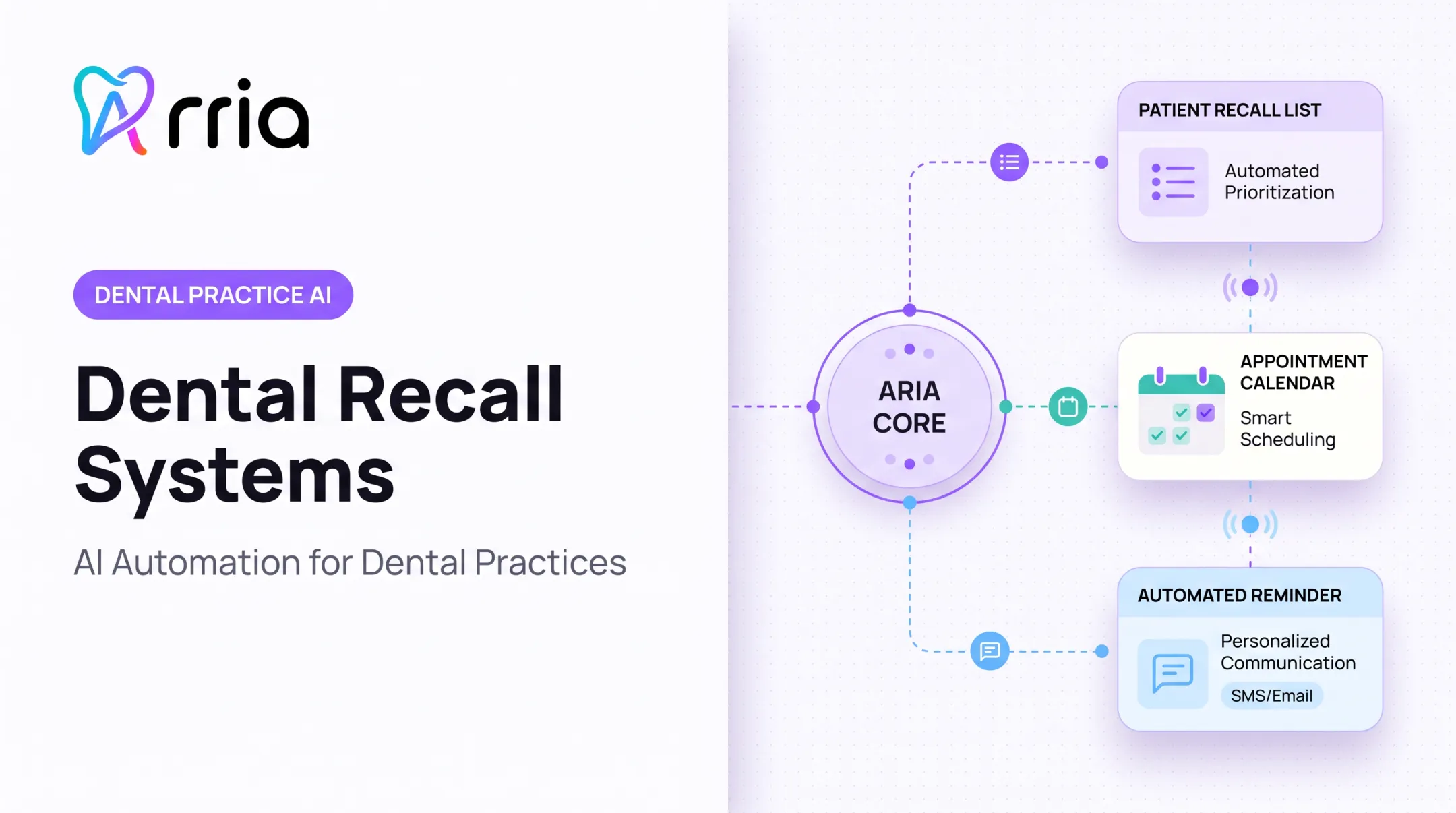
Aria connects practice management, revenue cycle, communications, and finance systems into a single operating layer. Teams can see unaccepted treatment and follow-up priorities without manually pulling reports from five different tools.
It can also initiate patient outreach through SMS, voice, web chat, or social channels, coordinated from that same shared view.
For a specialty practice where a single unaccepted case might be worth thousands of dollars, or a DSO managing follow-up across a dozen locations, that visibility makes follow-up a process you can manage.
Reviewing trends by provider, procedure type, location, and stated patient concern helps teams spot where follow-up falls through the cracks.

Periodic team training and role-play still matter for consistency. Keep each patient conversation individualized rather than scripted.
Frequently Asked Questions
What should be included in a dental case presentation?
A case presentation should cover the patient's concerns and goals, clinical findings, the recommended treatment, alternatives, benefits, risks, expected timeline, costs, and clear next steps. Every element should connect back to the patient's own priorities.
How should a dental case study be presented?
Structure it around the patient's initial concern, the assessment, treatment rationale, process, outcome, and limitations. Always secure appropriate consent before using images or identifying details.
What is the best way to explain a dental treatment plan to a patient?
Use plain language, visual evidence, and individualized benefits tied to what the patient actually cares about. Set realistic expectations, leave room for questions, and confirm understanding with teach-back.
How do you handle cost objections during a dental case presentation?
Provide transparent estimates, discuss phased treatment when clinically appropriate, and explain available payment policies. Acknowledge the financial concern directly instead of brushing past it.
How can dentists improve dental case acceptance ethically?
Focus on trust, active listening, patient education, and shared decision-making. Consistent follow-up matters too, but pressure or manufactured urgency should never be used.
What should happen after a patient does not accept treatment?
Document the decision, the patient's stated reasons, and any unresolved questions. Agree on an appropriate follow-up plan and continue any clinically indicated preventive or monitoring care in the meantime.