Introduction
Dental patient communication spans every touchpoint, not only the chairside conversation. It includes the Monday-morning phone call that goes unanswered, the reminder text a patient never receives because consent was never captured, the rushed crown-prep explanation, and the financial talk that lands too late to help.
Common failure points include:
- Unanswered or delayed phone calls and web inquiries
- Mixed messages between front desk, hygienist, and dentist
- Treatment explanations that move too fast for the patient to absorb
- Unclear or late-stage financial conversations
- Missed post-treatment follow-ups
- Unaddressed language, hearing, or health-literacy barriers
This article breaks down the communication skills dental teams need, how to apply them across the full patient journey, and where AI can help your practice stay timely and consistent—without replacing the human judgment patients rely on.
Key Takeaways
- Active listening, plain language, and transparent treatment talk build patient trust and shared decisions.
- Coordinate scheduling, reminders, education, financial talks, and recall so every touchpoint stays consistent.
- AI can handle routine outreach and FAQs, but sensitive or urgent situations still need a trained team member.
- Track response times, confirmation rates, and follow-through to measure whether communication is working.
Why Dental Patient Communication Matters
Dental patient communication covers every verbal, nonverbal, written, and digital exchange that shapes how a patient experiences care—from the first phone call to a recall reminder years later.
Research backs up what experienced front-desk teams already sense. Studies link clear, two-way communication to better outcomes:
- A 2026 Journal of Dental Education study tied transparent explanations and shared decisions to patient trust; distrust drove treatment avoidance and provider switches
- A 2024 literature review connected effective dentist-patient communication with informed decisions, lower anxiety, and stronger treatment adherence
- A 2025 JADA risk-management article lists communication among the factors that help prevent malpractice claims
Poor communication does more than frustrate patients. It creates confusion, complaints, and delayed care that strains the whole team.
Patient-Centered, Not Provider-Centered
Good communication starts with understanding the patient in front of you, not reciting a script written for the "average" patient. Before recommending next steps, the team should understand:
- The patient's specific concern or goal for the visit
- Health literacy and prior dental experiences
- Financial situation and insurance realities
- Readiness to move forward with treatment
Confirming Understanding, Not Just Delivering Information
Explaining something isn't the same as making sure it landed. Effective teams use:
- Teach-back: ask patients to restate, in their own words, what they'll do next—not a yes/no "Do you understand?"
- Open-ended questions that invite real answers instead of a polite nod
- Written or digital summaries patients can revisit after the visit
- Protected time for questions so the next chair doesn't cut the conversation short
The Agency for Healthcare Research and Quality's teach-back method exists because a nod is not proof of comprehension. When patients leave clear on next steps, schedules hold, treatment acceptance rises, and fewer issues bounce back to the front desk.
Core Communication Skills for Dental Teams
Listening and Asking Better Questions
Active listening means letting patients finish sentences, reflecting their concerns back, and documenting preferences instead of moving straight to the next task. Open-ended questions uncover far more than closed ones ever will:
- "What's worrying you most about this visit?"
- "What happened last time you had this procedure done?"
- "What would make scheduling easier for you?"
- "How are you thinking about cost before we go further?"
Empathy and Anxiety-Aware Communication
Dental anxiety shows up in clenched hands, short answers, or a patient who cancels twice. Acknowledging it without judgment and offering choices about pacing or breaks changes the entire tone of a visit.
Compare these two responses to a nervous patient:
- Dismissive: "It'll be over before you know it."
- Confirming: "A lot of people feel that way about this procedure. We can go slow, and you can raise your hand anytime you need a break."
Plain Language and Visual Education
Clinical jargon confuses patients and slows down consent conversations. The CDC's plain-language standard is simple: the audience should understand a message the first time they hear it. Apply that bar to diagnoses, cost estimates, and risks.
Visual aids help, when used to support decisions rather than pressure them:
- Radiographs and intraoral images
- Physical models or diagrams
- Short educational videos
- Written or digital treatment summaries
Transparency in Treatment and Financial Conversations
Present options neutrally. Cost is often the deciding factor, and it's a bigger one than many teams assume: 12.7% of people across all ages went without needed dental care in 2023 because of cost, according to the American Dental Association's Health Policy Institute.
That's a measure of foregone care, not a treatment-acceptance rate. Even so, cost conversations need to happen early—not after the patient has already committed emotionally.
Financing options should never substitute for informed consent. A payment plan doesn't replace a real conversation about risks, benefits, and alternatives.
Nonverbal Communication and Difficult Conversations
Eye contact, posture, tone, and even where you stand all send signals. A dentist hovering over a seated patient reads differently than one who sits at eye level before delivering news.
For complaints or disappointing news, a simple framework helps:
- Listen without interrupting
- Acknowledge the concern directly
- Verify the facts before responding
- Explain the next step clearly
- Document the interaction
- Escalate when it's beyond your role

Communication Across the Dental Patient Journey
First Contact and Access
Phone calls, web forms, online booking, and social messages all form a patient's first impression. Every incoming request needs a clear owner.
Standardized responses work for routine questions. Urgent symptoms, distressed callers, and complex insurance issues need a fast path to a human.
Scheduling, Confirmations, and Pre-Visit Prep
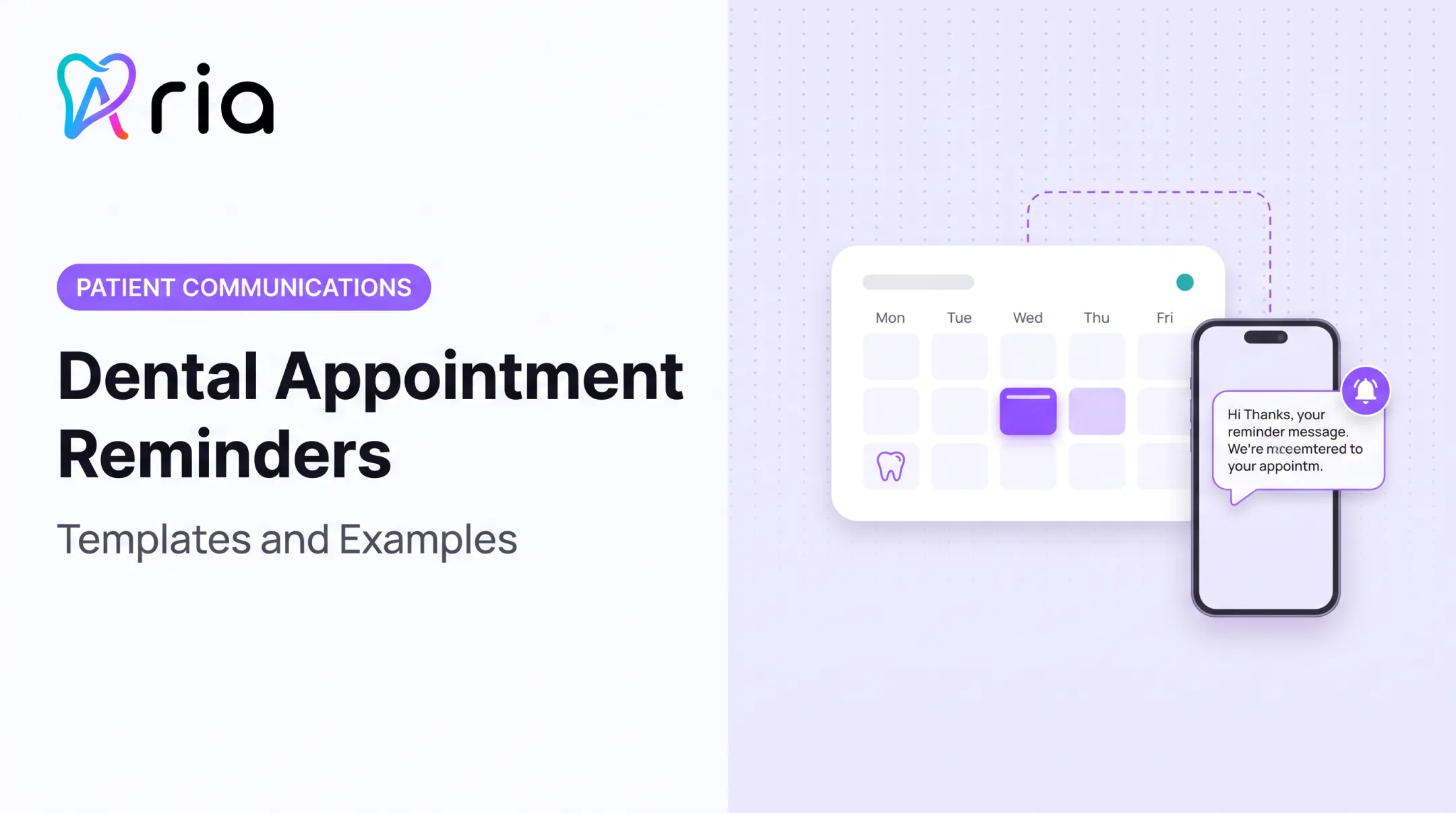
A good reminder does more than state a time. It should include:
- Appointment date, time, and provider
- Any prep needed (fasting, medication pauses, paperwork)
- How to cancel or reschedule
- Accessibility accommodations, if requested
- A clear way to respond
Channel preference matters more than practices might assume. In a Weave survey of dental patients, 73% preferred text reminders over calls or emails.
That said, consent still governs what's allowed. Under HIPAA, patients can request confidential communication through alternative channels, and practices should honor that.
In-Office and Chairside Communication
Set expectations before a procedure starts. During care:
- Narrate steps when patients want to know what's happening
- Check comfort levels throughout
- Confirm understanding before moving forward
Reception, assistants, hygienists, and the dentist should tell the same story. Nothing erodes trust faster than a patient hearing three different explanations for the same treatment.
Treatment Presentation and Decision Support
Present the diagnosis alongside options, benefits, risks, alternatives, timelines, and cost. Keep the conversation balanced rather than steered toward one outcome. Then give the patient something to take home:
- A written or digital treatment summary
- A defined follow-up date or method
- Time to think, rather than an assumption that silence means agreement
Post-Treatment Follow-Up and Ongoing Care
Post-visit communication works best when it stays specific and personal:
- Tie aftercare instructions to the procedure, not generic handouts
- Send recovery check-ins that catch complications early and show someone is paying attention
- Personalize recall and reactivation to treatment history and missed appointments, without guilt-tripping the patient

Accessibility, Inclusion, and Personalization
Federal guidance sets real obligations here. HHS's Section 1557 rules require covered health programs to provide free, accurate, and timely language assistance. They also restrict relying on family members or children as interpreters.
The ADA's effective-communication rules require accommodations for patients with hearing or vision impairments. Choose those accommodations based on the complexity of what you need to communicate.
Personalization should reflect actual patient needs and consent, never assumptions based on age, appearance, or financial situation.
Using AI to Strengthen Dental Patient Communication
Where AI Can Help
AI handles the repetitive, high-volume parts of communication well:
- Appointment requests, confirmations, and reminders
- FAQs and two-way scheduling changes
- Reactivation outreach
- Message routing across SMS, voice, web chat, and social
The difference between real AI and basic automation comes down to a few capabilities:
- Natural-language responses instead of rigid scripts
- Detecting patient intent, not just keywords
- Personalizing outreach based on history
- Escalating when a conversation goes beyond routine territory
Connecting Communication to Operational Context
Messaging works better when it's not an isolated tool bolted onto the practice. A reminder that knows a patient has an outstanding balance, or a recall message that knows there's unscheduled treatment on file, is simply more useful than a generic template.
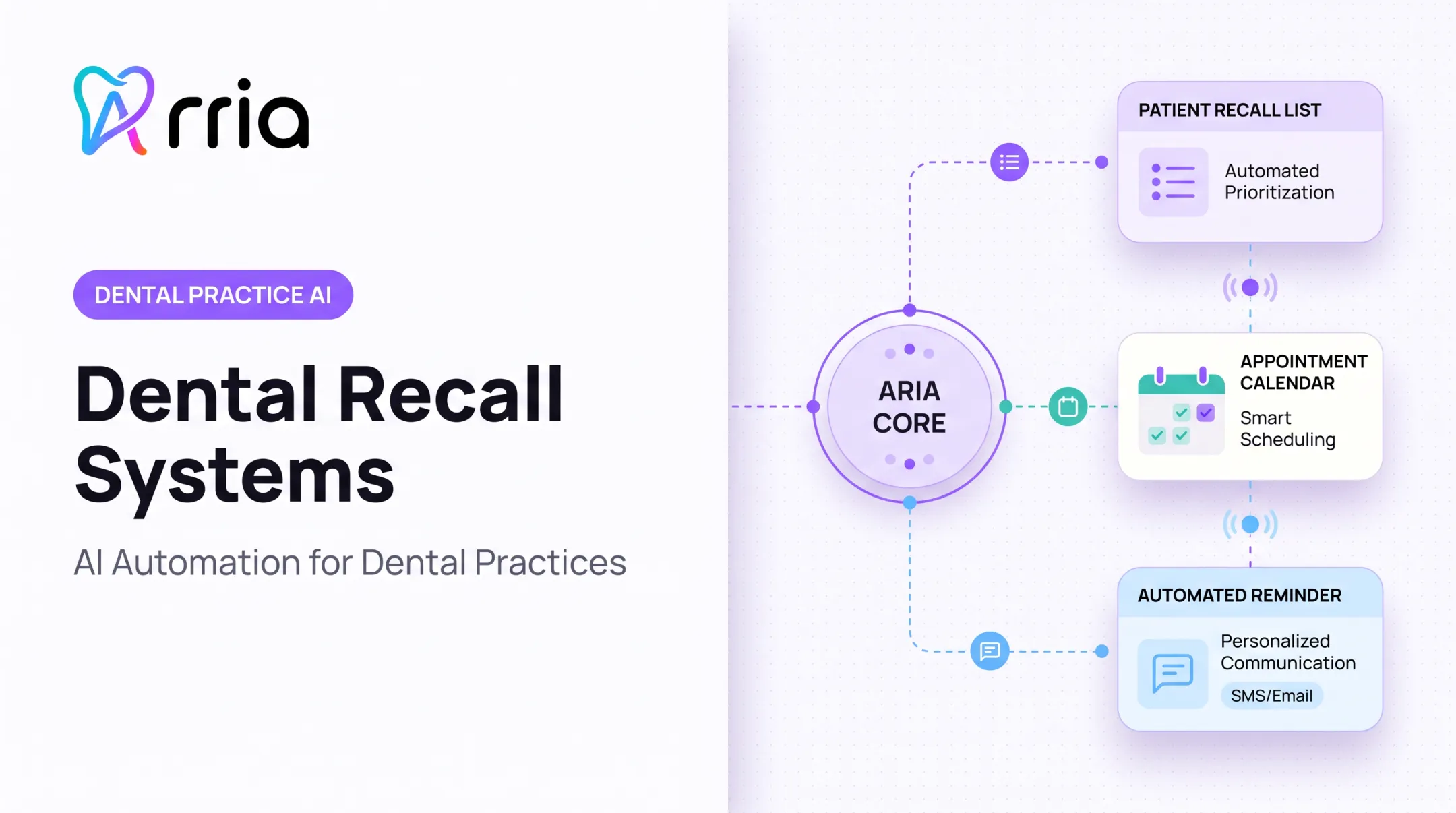
This is where Aria, an AI operating layer for dental practices, fits in. Aria connects practice management, revenue cycle, and communication systems so outreach reflects what's actually happening operationally, whether that's a scheduling gap, unaccepted treatment, or a patient who's overdue for recall.

It turns those insights into outreach, recurring reports, alerts, and workflows instead of leaving that context siloed in separate systems.
Supporting Staff Without Replacing Human Care
AI should own the repetitive, low-risk conversations. Clinical advice, emergencies, complaints, sensitive financial talks, informed consent, and emotionally complex situations still belong with trained staff. Practices need clear rules for this split:
- Defined escalation triggers (keywords, sentiment, repeated contact attempts)
- Human review for anything flagged as urgent or ambiguous
- Response-time expectations for both AI and staff
- Named ownership for conversations that stall
Protecting Privacy and Communication Quality
Any AI vendor touching protected health information needs a signed business associate agreement, per HHS guidance, regardless of how the product is marketed. Encryption alone doesn't satisfy HIPAA on its own.
Before trusting AI-generated messages, review them for accuracy, tone, and alignment with practice policy. Confirm the vendor can explain how patient data is stored, accessed, and secured.
Measuring Results and Improving Workflows
Track outcomes that actually reflect communication quality:
- Unanswered inquiries and response time
- Confirmation and rescheduling completion rates
- No-shows and late cancellations
- Treatment follow-through after presentation
- Patient feedback and staff time saved
Roll out one workflow at a time. Compare before-and-after results, gather feedback from both staff and patients, and adjust timing or escalation rules based on what you actually see, not what a vendor's case study promises.
Building a Practice-Wide Communication System
Individual skills only go so far without structure behind them. A practice-wide system needs:
- Written standards for tone, plain-language terms, response ownership, privacy, urgent issues, complaints, and financial discussions
- Journey map showing where information gets lost between reception, clinical staff, and treatment coordinators
- Shared scripts and templates for routine situations, with training on adapting them instead of reading them word for word
- Role-based training covering active listening, teach-back, anxiety awareness, de-escalation, accessibility, and technology use
- Regular audits of calls, messages, and treatment conversations for clarity and consistency
Once those pieces are defined, roll them out in a controlled sequence rather than all at once.
Implementation checklist:
- Pick one priority workflow to start, such as post-visit follow-up
- Confirm HIPAA consent and privacy requirements for each channel
- Assign clear ownership for responses and handoffs
- Define escalation criteria for urgent and sensitive issues
- Train the team involved before go-live
- Launch in a limited scope—one team or location
- Review outcomes before expanding practice-wide

Frequently Asked Questions
What is the role of communication in dentistry?
Communication builds trust, supports informed consent, reduces anxiety, and improves treatment understanding and follow-through. It also directly affects appointment attendance and long-term patient relationships.
What are the four types of oral communication in dentistry?
The ADA does not publish one official four-type list. In practice, dental teams usually group spoken communication as provider-to-patient, patient-to-provider, staff-to-staff, and patient education or counseling.
What is the 3-3-3 rule in dentistry?
No widely accepted dental standard uses this exact name. If your team encounters it, verify the original source and clinical context before adopting it in practice.
What is the 2-2-2 rule in dentistry?
The ADA recommends brushing twice a day for at least two minutes and seeing a dentist regularly. A third "2"—such as a fixed twice-yearly visit for every patient—is not part of that official guidance.
How can dental practices improve patient communication between visits?
Use clear recall and follow-up messages across phone, text, and email, and keep timing consistent after visits, treatment offers, and missed appointments. Short, plain-language outreach helps patients respond faster and keeps schedules fuller.