Most practices run into the same wall: new-patient volume swings month to month, inquiries show up unqualified, calls go unanswered, follow-up lags, treatment plans sit unaccepted, and nobody can say with confidence which channel actually produced revenue. This guide walks through defining your ideal patient and offer, choosing channels that match intent and capacity, tightening conversion and follow-up, and measuring results through booked and completed appointments, not vanity metrics.
Key Takeaways
- Qualified patient opportunities and booked appointments matter more than raw lead volume.
- Blend high-intent search, local visibility, content, referrals, and reactivation over any single channel.
- Treat website, front desk, communications, and tracking as one conversion process.
- Review source, response time, show rate, and treatment acceptance before increasing ad spend.
What Is Dental Lead Generation?
Dental lead generation is the process of attracting prospective patients, capturing their contact or booking information, qualifying what they actually need, and moving them toward a scheduled appointment. That last part gets skipped constantly. A practice can generate hundreds of form fills a month and still see flat production if nobody follows through.
The path from first touch to retained patient usually runs through these stages:
- Visitor – someone views your website, ad, or Google Business Profile
- Lead – they submit contact info or call
- Qualified lead – their need matches a service you can realistically treat
- Scheduled patient – an appointment is on the books
- Completed appointment – they show up and are seen
- Accepted treatment – they agree to a proposed plan
- Retained patient – they return for recall, hygiene, or additional care
Capacity and Context Change Everything
A lead that's a perfect fit for one practice can be a poor fit for another. Before you spend another dollar on acquisition, consider:
- Provider and hygiene schedule capacity
- Insurance participation and payer mix
- Urgency (emergency vs. elective)
- Whether unaccepted treatment plans are being tracked and followed up at all
That last point is often the biggest missed opportunity. A practice chasing new patients while ignoring existing patients with open treatment is leaving money on the table it already paid to generate.
Define the Right Patient, Service, and Offer
Not every patient segment deserves the same marketing push. Start by identifying who you actually want more of:
- Emergency patients (same-day pain relief)
- New families (routine care, pediatric)
- Cosmetic prospects (veneers, whitening)
- Implant and specialty-referral candidates
- Orthodontic patients
- Overdue existing patients with unscheduled treatment
Match Each Segment to a Specific Next Step
A generic "contact us" page doesn't work for a patient in pain versus one comparing implant providers. Build separate offers:
- Emergency patients → a visible call button and same-day slot
- Cosmetic or implant prospects → a consultation request with financing information
- Overdue patients → a direct recall or reactivation message, not a landing page
Consider a morning snapshot many practices never see in one place:
- Four new patients scheduled today
- 20 patients with hygiene recall due this week
- Seven patients sitting on $26,200 in unscheduled treatment
That unscheduled treatment figure is often larger than the marketing budget spent chasing new leads that month. Aria's Morning Huddle report surfaces this view each morning, including open chair time such as an 11:30 a.m. emergency slot or a 2:00–3:30 p.m. same-day treatment block, so the front desk knows what to act on immediately.

Build Trust Into the Offer
Before someone books, they want reassurance. Include:
- Provider credentials and photos
- Transparent pricing or financing ranges
- Patient reviews
- A clear explanation of what happens after they reach out
Keep the Journey Connected
Map what a patient needs at each stage:
- Awareness: education and trust signals
- Consideration: comparisons and reviews
- High-intent search: ready to book now
Use consistent calls to action across your website, Google Business Profile, ads, and phone scripts. Multi-location groups should standardize this journey centrally while letting individual practices adjust service mix and local messaging.
Choose and Prioritize Dental Lead Generation Channels
Spreading a limited budget across every platform is a common mistake. Prioritize by intent, prove what works, then expand.
Start With High-Intent Channels
These capture patients already looking for care:
- Service-specific SEO and an optimized Google Business Profile
- Google Search Ads for high-intent queries (WordStream's 2025 benchmark: median $7.85 CPC and $83.93 cost per lead)
- Local Services Ads (where eligible): pay per valid lead such as calls, messages, or booking requests
- Accurate directory listings and online scheduling
Those ad figures are lead costs, not cost per booked or completed patient, so track downstream outcomes separately.
Use Organic Content for the Research Phase
Patients researching symptoms, procedure costs, anxiety, or candidacy need answers before they're ready to book. Content addressing those questions, with a clear next step at the end, captures that audience without competing on bid price.
Add Paid Social for Consideration-Stage Services
Cosmetic dentistry, implants, orthodontics, and specialty consultations often benefit from paid social and retargeting.
Health-related ad targeting is a sensitive category on platforms like Google, which restricts advertiser-built audiences around health interests. Plan creative and consent accordingly, and send traffic to a service-specific landing page, not your homepage.
Don't Skip Reputation and Referrals
- Request and respond to reviews consistently
- Build a patient referral program
- Maintain professional referral relationships
- Use before-and-after content only with documented patient permission
The rule of thumb: pick one or two channels that match your current capacity and measurable intent. Prove they work before adding a third.
Convert, Follow Up With, and Measure Every Lead
Generating an inquiry is only half the job. What happens in the next five minutes often decides whether it becomes a patient.
Fix the Conversion Path First
- Mobile-first pages with visible click-to-call
- Online scheduling that doesn't require a phone call
- Short forms, not ten-field intake
- FAQs addressing cost, insurance, and hours upfront
Build a Real Lead-Handling Workflow
Assign clear ownership for every intake channel:
- Call answering and voicemail recovery
- Web chat and form notifications
- Escalation between marketing and the front office
Without clear ownership, leads sit untouched.
Speed Isn't Optional
A widely cited InsideSales' 2021 study of more than 55 million sales activities found conversion rates more than eight times higher when contact happened within five minutes versus waiting between five minutes and 24 hours. That's a general sales finding, not a dental-specific guarantee, but it's a reasonable target to test against your own numbers.
Follow-up shouldn't stop at one attempt. Build separate sequences for:
- New inquiries
- Missed calls
- Unaccepted treatment plans
- No-shows
- Overdue recall patients
Measure What Actually Converts
Track the numbers that show whether speed and follow-up are working:
- Median first-response time by channel
- Lead-to-scheduled-appointment rate
- Show rate and same-day cancellations
- Cost per new patient by source
- Unaccepted treatment plans reactivated
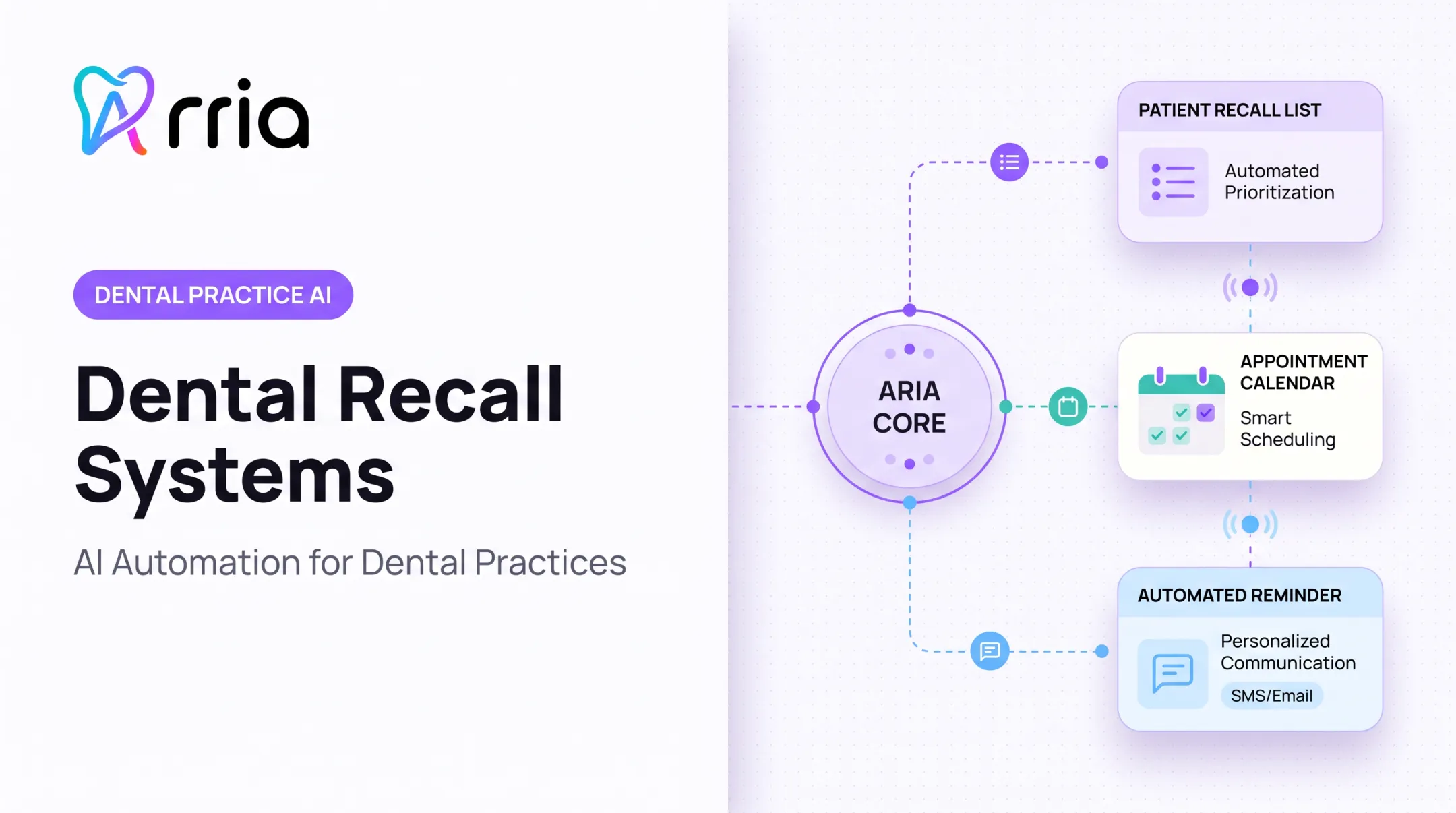
Connecting your systems is what makes this repeatable. Aria's patient communication layer coordinates SMS, voice, web chat, and social channels so follow-up for a missed call, an unscheduled treatment plan, or an overdue hygiene patient does not depend on someone checking a list.
Its AI receptionist and chatbot can handle routine scheduling questions with connected practice data, which cuts how many calls hit voicemail. The same layer surfaces response times, source performance, and outreach results so you can see which sequences fill the schedule.

Track Lead Quality, ROI, and Operational Performance
A click isn't revenue. Before you decide a channel is working, trace it through the full funnel.
Build a Source Taxonomy
Separate performance by channel so you can see what actually drives booked care:
- Organic search
- Google Business Profile
- Paid search and Local Services Ads
- Paid social
- Referrals and direct traffic
- Existing-patient reactivation
Mixing these together makes every decision a guess.
Track the Whole Path, Not Just the Click
| Stage | What to Capture |
|---|---|
| Inquiry | Source, service interest |
| Contact | Outcome, qualification |
| Appointment | Scheduled, completed, no-show/cancellation |
| Treatment | Accepted, collected |
| Retention | Return visit, recall adherence |
Know What Realistic Benchmarks Look Like
Appointments and completed care are not the same thing. Planet DDS's 2025 report found an average 7.4% no-show rate and 15.5% advance cancellation rate across practices it studied.
Its 2026 deep dive went further, putting average case completion at just 47%. Some practices showed a 77% acceptance rate but only 20% actual completion.

That gap between what patients agree to and what they follow through on deserves as much attention as new-patient acquisition.
Reconcile the Data
Call tracking, form attribution, and booking-source fields only matter if they're reconciled against your practice-management records.
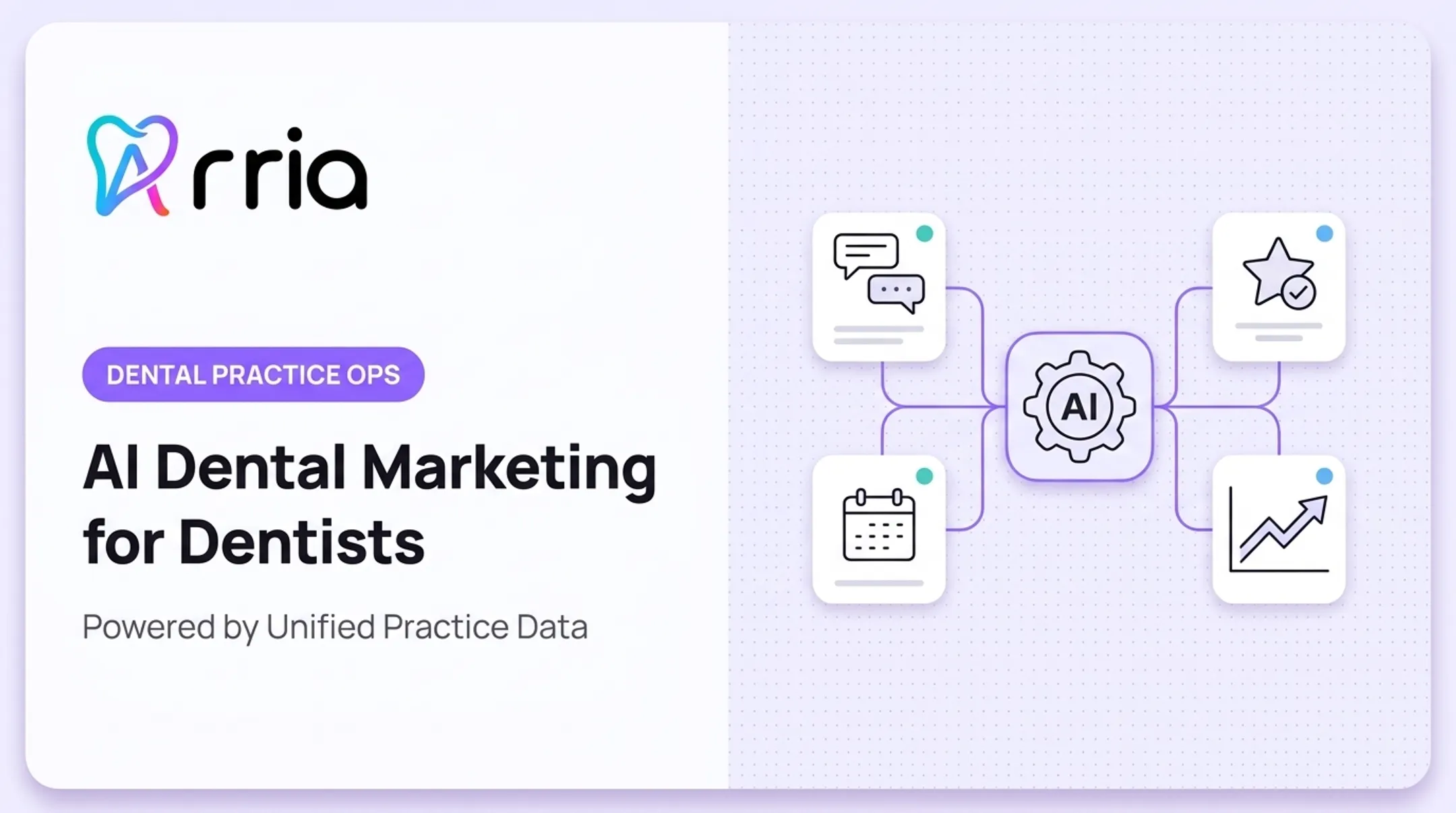
This is the gap Aria is built to close. It connects practice-management, revenue-cycle, and communication systems into one layer so teams can ask natural-language questions, compare performance across providers or locations, and get recurring reports instead of assembling spreadsheets by hand.
Its predictive models also flag no-show risk, churn risk, and schedule gaps before they show up in next month's production numbers.
A Quick Compliance Note
HIPAA considerations apply to outreach and tracking, not just clinical records. Keep in mind:
- Appointment reminders are treatment communications and generally don't require marketing authorization
- Marketing use of patient data typically does require written authorization
- Business associate agreements are needed when a vendor handles protected health information
- Website tracking pixels on authenticated pages can expose PHI if misconfigured
- Call recording consent rules vary by state
A Practical 90-Day Dental Lead Generation Plan
Days 1–30: Audit
- Review capacity, target patients, and current offers
- Audit website conversion paths, Google Business Profile, and reviews
- Check call handling and referral-source capture
- Identify existing-patient opportunities sitting unaddressed
Days 31–60: Launch
- Pick one high-intent channel and improve or launch it
- Fix one conversion or follow-up workflow
- Build service-specific landing pages
- Assign clear response ownership and set up tracking
Days 61–90: Refine
- Review lead quality and downstream outcomes, not just volume
- Cut wasted spend
- Tighten keywords, offers, and follow-up gaps
- Decide if you're ready to add another channel
Ongoing rhythm: review open opportunities weekly, channel and appointment performance monthly, and service mix, retention, and treatment outcomes quarterly.
Frequently Asked Questions
What is dental lead generation?
It's the process of attracting prospective patients, capturing their contact or booking details, qualifying their needs, and following up until they're scheduled. Done well, it extends through completed treatment, not just the first call.
What is the best way for dentists to generate leads?
The right mix depends on your intent, service lines, capacity, and budget. Most practices start with high-intent search, local visibility, referrals, and reactivating existing patients before expanding further.
How much does dental lead generation cost?
Costs vary widely by market, service, and channel. Current benchmarks show dental search ads averaging around $84 per lead, but that figure reflects a lead, not a booked or completed patient.
How can a dental practice turn leads into appointments?
Fast response, trained call handling, mobile-friendly booking, and consistent follow-up all matter. Track each inquiry through to scheduled and completed status, not just first contact.
How should dentists track lead-generation results?
Attribute sources through forms, calls, and booking systems, then reconcile against practice-management records. Prioritize completed visits and accepted treatment over click counts.
Is dental lead generation compliant with HIPAA?
It depends on how data is handled, what consent is collected, and which vendors touch protected health information. Business associate agreements, secure tools, and careful tracking configuration all factor in.