It’s an ecosystem of connected imaging, software, CAD/CAM, artificial intelligence, records, and communication tools. This article breaks down what digital dentistry really means for your practice. We'll explore the main technologies, walk through a typical digital workflow, analyze the clinical and operational benefits, and discuss how to implement these tools effectively—including the growing role of AI in running a smarter dental business.
Key Takeaways
- A Connected Ecosystem: Digital dentistry uses a network of tools and data for everything from diagnosis and fabrication to patient engagement and practice management.
- Process Over Product: Digital workflows can improve efficiency and communication, but success depends on accurate data, compatible systems, a well-trained team, and proper clinical oversight.
- Two Sides of AI: Artificial intelligence supports both clinical analysis (like reading images) and business operations, where it helps prioritize tasks, automate work, and make sense of performance data.
- Solve a Problem First: Evaluate new technology based on a specific workflow challenge and a measurable goal, not just because it’s the latest trend.
What Is Digital Dentistry?
Digital dentistry uses computer-based technology to perform or support dental procedures instead of relying only on mechanical or electrical tools. It replaces traditional workflows built on physical impressions, paper records, manual measurements, and disconnected files with an integrated, data-driven approach.
A digital dental workflow typically involves these stages:
- Capturing clinical data (such as with an intraoral scanner or CBCT)
- Storing and sharing digital records securely
- Planning treatment using specialized software
- Designing a restoration or appliance (CAD)
- Manufacturing the item (CAM), often with a milling machine or 3D printer
- Delivering or adjusting the final result

This ecosystem includes chairside clinical technologies patients see and the behind-the-scenes software that connects providers, labs, patients, and administrative teams. When those systems work together, digital files can move seamlessly between a dentist, a specialist, and a dental laboratory. Success still hinges on system compatibility and data standards, because information transfer is often the hard part.
Adoption is growing: a 2023 ADA Clinical Evaluators Panel survey found 17% of responding dentists use a 3D printer. Digital tools still support professional judgment; they do not replace it. Clinical examination, diagnosis, and dentist oversight remain the foundation of patient care.
Key Digital Technologies Used in Dentistry
The "digital dentistry" umbrella covers a wide range of tools, each built to solve a different clinical or operational problem. These are the major categories practices rely on today.
Intraoral Scanners and Digital Impressions
These devices use a small wand to capture thousands of images inside a patient's mouth, creating a precise 3D model of their teeth and gums. Compared to conventional impression materials, scanners can be faster and more comfortable for the patient. A 2023 systematic review of randomized trials confirmed that digital impressions can improve the patient experience, though a clear advantage in clinical fit depends on the specific procedure.
Digital Imaging Technologies
This category includes digital radiography (standard X-rays) and cone beam computed tomography (CBCT). These tools provide diagnostic detail that isn't visible to the naked eye.
Digital X-rays cover routine assessments. CBCT builds a 3D view of teeth, soft tissues, nerves, and bone for implant planning and complex orthodontic cases. The FDA notes that CBCT generally involves more radiation than conventional X-rays, so each scan should be clinically justified.
CAD/CAM Systems
CAD/CAM (Computer-Aided Design/Computer-Aided Manufacturing) drives digital fabrication.
- CAD software designs crowns, bridges, veneers, dentures, and surgical guides
- CAM technology mills or 3D-prints the physical restoration from that design
Digital Records and Practice Management Software (PMS)
Your practice management system is the digital hub of the office. It handles scheduling, charting, treatment planning, billing, and patient communications.
Some systems lean clinical; others lean business operations. What matters most is how well the PMS integrates with other clinical and financial systems so you get one clear picture of practice performance.
AI-Enabled Tools
AI shows up in the dental stack in two distinct forms:
- Clinical AI flags caries or bone loss on radiographs, supports treatment-planning simulations, and helps automate chart notes
- Operational AI reads schedules, production, collections, and patient communications to surface priorities, cut routine admin, and give owners actionable next steps
| Technology Category | Problem It Addresses | Who Uses It | Key Consideration |
|---|---|---|---|
| Intraoral Scanners | Uncomfortable, slow physical impressions | Clinicians, Assistants | Accuracy for full-arch cases; learning curve for team |
| Digital Imaging (CBCT) | Need for 3D anatomical data for complex cases | Clinicians, Specialists | Radiation dose; clinical justification for each scan |
| CAD/CAM Systems | Manual design and fabrication of restorations | Clinicians, Lab Technicians | Material compatibility; open vs. closed system |
| Practice Management | Disconnected clinical and administrative records | Entire Practice Team | Integration capabilities with other software |
| Artificial Intelligence | Buried insights in data; manual admin tasks | Clinicians, Office Managers | Clinical vs. operational use; human oversight |
How Digital Dentistry Works: From Data Capture to Patient Care
Let's walk through a common example: creating a single crown using a digital workflow.
- Scan: Start with an intraoral scan of the prepared tooth, opposing arch, and bite. The digital impression is often faster and more comfortable than traditional putty.
- Design: Import the 3D scan into CAD software. A clinician or lab technician shapes the crown’s fit, contours, and contact points, and can use visual models to explain the plan to the patient.
- Manufacture: Send the final design to a CAM unit. A chairside mill can cut the crown from a ceramic block in under an hour, or the file can go to a lab for milling or 3D printing.
- Deliver: Try in the crown and verify fit. After finishing and polishing, cement it permanently and document the full scan-to-seat path in the patient’s digital record.

Teams gain fewer handoffs and faster file sharing across the chair and the lab. Consistent results still depend on operational discipline:
- Upfront spend on scanners, software, and mills or printers
- Training time for clinicians and support staff
- Calibration, maintenance, and reliable connectivity
Benefits and Business Impact of Digital Dentistry
When implemented thoughtfully, digital dentistry delivers value across patients, clinicians, labs, and practice owners.
- Patients: More comfortable impressions and clearer treatment-plan visuals
- Clinicians: More precise diagnostic and planning data, with repeatable files for reviews, referrals, and future care
- Laboratories: More consistent impressions that cut fabrication errors and miscommunication
- Practice owners: Leaner workflows, lower material costs, fewer shipping delays, and shorter team handoffs
However, a return on investment isn't guaranteed. Practices should measure ROI against a short set of operating metrics:
- Chair time
- Case acceptance
- Laboratory expenses
- Remake rates
For example, a January 2024 article in Dental Economics reported that one of Heartland Dental's associated labs saw a 2.15% remake rate for digital cases versus 4.28% for analog cases. That gap is a clear margin signal for practices that execute the digital workflow well.
Financial upside still depends on secure data handling. Before adopting any new digital tool, review HIPAA obligations, access controls, and backup procedures.
How AI and Operational Technology Fit Into Modern Dental Businesses
As we've seen, there are two different kinds of AI in dentistry. While clinical AI focuses on diagnostics, a new category of operational AI is emerging to help manage the business itself.
Think of all the systems that run your practice: the PMS, revenue cycle software, payroll, patient communication tools, and accounting software. They all contain valuable data, but they rarely talk to each other. This forces your team to manually pull reports, build spreadsheets, and jump between systems just to answer basic questions about practice performance.
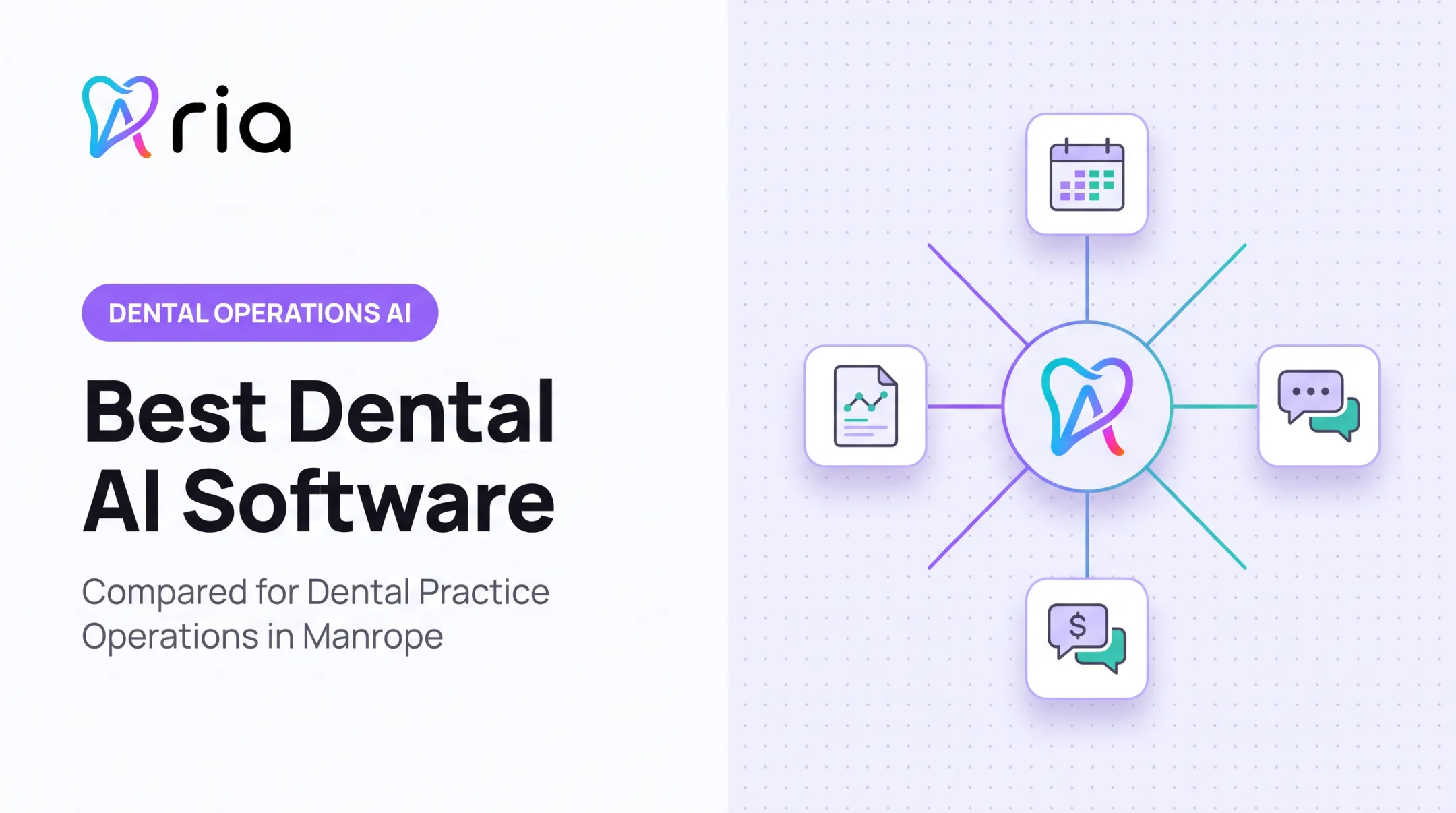
An operational AI layer, like Aria, sits on top of all these existing systems. It unifies the data and creates a single source of truth for your entire operation. Instead of building manual reports, your team can ask questions in plain language, such as:
- "Show me our production and collection numbers for last month by provider."
- "Which patients are overdue for hygiene and have unscheduled treatment?"
- "Are we on track to hit our production goal this week?"
Aria connects dental business data, answers these questions, and turns insights into action. Teams can:
- Identify schedule gaps
- Prioritize unscheduled treatment follow-ups
- Flag patients at risk of no-showing
- Automate patient outreach
That shift cuts reactive report-pulling and supports faster day-to-day decisions.
For practices using Aria, the gains show up in the numbers. The platform reports an average reduction of 32% in administrative overhead and saves teams more than 20 hours of manual administrative time per week, freeing staff to focus on patient care.
How to Evaluate and Implement Dental Technology
New dental technology only pays off when it solves a real practice problem. A structured evaluation and rollout helps you choose the right tools and get your team using them.
- Start with the problem. Before you compare products, name the workflow gap you need to close. Uncomfortable impressions, slow lab turnarounds, inconsistent reporting, or hours lost on manual admin all point to different solutions. Define the outcome you want first.
- Evaluate holistically. Features alone are not enough. Weigh:
- Clinical fit and interoperability with your current software
- Data ownership, security controls, and HIPAA requirements
- Vendor support and training burden
- Total cost of ownership, not just purchase price
- Roll out in phases. Document your current workflow, pick one high-value use case for a pilot, and train a small dedicated group. Test the process, watch the metrics, and fix issues before you expand.
- Measure what matters. Track metrics tied to the original problem—appointment time, case turnaround, remake rates, treatment acceptance, or administrative hours saved—so you can prove value.

For a successful implementation, use this checklist:
- Identify the specific problem you are solving
- Confirm system compatibility and interoperability
- Validate vendor security and HIPAA compliance
- Involve clinical and administrative users in the decision
- Establish human review and oversight for automated workflows
- Schedule periodic checks against your goals
Frequently Asked Questions
How much do digital dentures cost?
Cost varies widely by denture type, materials, complexity, provider, and insurance coverage. Ask your dental provider for a personalized estimate—there is no single standard price.
What is digital dental technology?
Digital dental technology is the set of tools that digitize clinical and practice work: intraoral scanners, 3D imaging (CBCT), CAD/CAM fabrication, 3D printers, practice management software, and AI for clinical and operational support.
What software do most dentists use?
Most practices run a core Practice Management System (PMS) plus specialized tools for imaging, scanning, CAD/CAM, billing, and patient communications. The right mix depends on practice size, specialty, and existing workflows.
What is the best CAD software for dentistry?
There is no single best option. Choose based on the restorations you design, ease of use, lab compatibility, open versus closed systems, and total cost.
What is the best dental AI software?
It depends on your goal. Clinical AI supports tasks like image analysis; operational AI focuses on scheduling, reporting, outreach, and workflow intelligence. Validate evidence, security, and measurable value for your specific need.